

Future Trends of Biomaterials Shaping the Modern Bio-Medical Era
In the era of modern medicine, the combination of engineering and biology has opened up remarkable advancements in human healthcare. Among these, Biomaterials and Biocompatibility play a core role in all applications—from everyday medical devices to tissue engineering technologies.
What Are Biomaterials?
According to a general definition by Prof. Manuel Salmeron Sanchez, biomaterials are any materials designed and engineered to interact directly with biological entities (the human body) to perform a specific biological function.
The scope of biomaterials is extremely rich and spans different levels of complexity:
-
Simple materials: Products that have been popular for decades, such as contact lenses—which, despite having a relatively simple structure, play an important role in supporting daily vision.
-
Complex materials (Tissue Engineering): Sophisticatedly designed biological scaffolds aimed at stimulating biological responses, promoting tissue regeneration, and providing novel therapeutic treatments.
When introducing these complex materials into the body, they come into contact with diverse biological environments (such as the immune system). Therefore, controlling and coordinating the immune response is the decisive factor in the success or failure of the material.
The Essence of Biocompatibility
The concept of biocompatibility is always closely linked to the development of biomaterials. Based on the standardized definition (developed by Professor Williams in 2008), biocompatibility is a relative and selective concept.
Biocompatibility must always be defined for a specific material in a specific application.
Illustrative Example:
If we fabricate an advanced scaffold to regenerate cartilage:
-
When implanted into the body, if the material is merely encapsulated without causing harm, it may meet the basic "safety" standard.
-
However, because the material fails to perform its intended function of regenerating cartilage as originally designed, from a tissue engineering perspective, this material does not meet the biocompatibility requirement.
Thus, a material meeting biocompatibility standards must not only be non-toxic, but must also successfully fulfill its designated biological function within the implantation environment.
Bioengineering – The Big Picture
Both Biomaterials and Biocompatibility fall within the broader scope of Bioengineering.
Bioengineering is the application of synthetic engineering principles to improve human health. This field requires multidisciplinary collaboration across:
-
Materials Science
-
Optics
-
Imaging & Diagnostics
The ultimate goal of Bioengineering is to deliver innovative healthcare solutions that enhance the quality of life for the community.
Biomaterial Trends in the Modern Biomedical Era
The continuous development of modern medicine requires breakthroughs in Biomaterials. Moving beyond basic mechanical strength and biological safety, the next generation of materials is driving toward optimization for niche applications, competitive pricing, and high-tech integration.
Based on analysis from Dr. Ciro Chiappini, the main material groups—including Polymers, Bioceramics, Metals, and Semiconductors—are developing under distinct strategic trends.
A. Polymeric Materials: High-Volume Production & Flexible Customization
Polymers continue to hold a leading position in mass-market applications thanks to clear manufacturing advantages:
-
Tunable Properties: One of the biggest advantages of polymers is the ability to flexibly fine-tune mechanical and biological properties to meet precise treatment needs.
-
High-Volume & Affordability: Polymers are the top choice for applications requiring large-scale production at optimized costs, helping medical solutions reach a broader patient population.
-
Suitable Niche Positioning: While not meeting extreme high-performance standards like specialized ceramics or metals, polymers are ideal for general biological devices.
B. Bioceramics & Metals: Specialized Materials for High-End Segments
Unlike polymers, Bioceramics and Metals are heavily developed toward specialized directions:
-
High-End Niche Applications: Ceramics and metals possess superior mechanical properties, playing an irreplaceable role in load-bearing or long-term durability applications (such as artificial joints, dental implants, and bone fixation devices).
-
Optimization of Biological Characteristics: Current trends focus on refining metal surfaces and ceramic structures to enhance osteo-integration and specialized biocompatibility with specific organs.
C. Semiconductors / Silicon: High-Tech Integration Breakthroughs
Although Silicon is not a traditional universal biomaterial, semiconductors are opening revolutionary paths for precision medicine:
-
Unique Physical/Chemical Attributes: Silicon possesses unique attributes unavailable in other material groups, strongly supporting micro-biosensors and smart drug delivery systems.
-
Leveraging Microfabrication: Utilizing 40–50 years of rapid advances in the semiconductor industry, silicon-based micro/nanofabrication enables the creation of ultra-precise biological devices at the microscale.
Future Biomaterial Development Strategy
| Material Group | Core Advantage | Future Application Direction |
|---|---|---|
| Polymers | Tunable properties, low cost, large-scale production | General medical devices, tissue regeneration scaffolds |
| Ceramics & Metals | High mechanical strength, high load-bearing capacity | Load-bearing implants, high-end specialized medical tools |
| Semiconductors (Silicon) | Unique microstructural properties, leverages semiconductor tech | Micro-biosensors, Lab-on-a-chip, neural interfaces |
Biomedical Materials: A Comprehensive Perspective in Modern Medicine
In healthcare, the terms Biomaterials and Biomedical Materials often cause conceptual confusion. Establishing a clear scope for Biomedical Materials is essential for building a solid scientific foundation in research and application.
According to Prof. Brian W. Darvell, defining biomedical materials requires an open-minded and inclusive approach rather than rigid boundaries.
A. Core Concept of Biomedical Materials
The word "Medical" directly implies use in medical and surgical procedures.
Broadly understood, biomedical materials are materials specified by clinicians and medical researchers to be placed into a bodily context to perform critical roles:
-
Prosthesis & Repair: Regenerating damaged tissues, bones, or organs (e.g., artificial joint replacements, facial reconstruction, limb prosthetics).
-
Protection: Creating biological barriers to prevent injury or infection.
-
Extension: Supporting or expanding the operational capacity of biological systems inside the body.
These applications deliver immense value, directly improving patients' quality of life.
B. Avoiding Narrow Definitions in Research & Education
A common issue in medical research (especially dentistry) is narrowing the scope—considering only materials directly contacting or permanently implanted into the body as biomaterials.
Prof. Brian W. Darvell emphasizes:
Biomedical Materials Science must not exclude auxiliary materials simply because they are not directly "biological" or permanently located inside the body.
Why a Comprehensive Perspective Is Needed:
-
Auxiliary Manufacturing Processes: Creating a bone plate or complete prosthesis requires numerous auxiliary materials during preparation, casting, and machining.
-
Scientific Interconnectedness: Ignoring auxiliary materials leads to overlooking factors that directly impact the quality, residual toxicity, and overall effectiveness of the final implant.
-
Educational & Research Direction: Medical materials science must encompass all these aspects within practical curricula and research.
Comparing Biomaterials vs. Biomedical Materials
| Criterion | Biomaterials | Biomedical Materials |
|---|---|---|
| Nature | Materials interacting with biological systems (medical, biotech, agriculture, etc.) | Materials designed specifically for medical & surgical procedures |
| Scope | Focuses on surface interactions between material and cells/tissues | Includes implant materials and all auxiliary materials in the treatment process |
| Goal | Biocompatibility, avoiding negative immune reactions | Prosthetics, protection, regeneration, and improving patient quality of life |
(References)
-
Salmeron Sanchez, M. Biomaterials and Biocompatibility. Nguồn: Dentistry_3x: Biomaterials and Your Health
-
Williams, D. F. (2008). On the mechanisms of biocompatibility. Biomaterials, 29(20), 2941-2953.
-
Chiappini, C. Future Trends of Biomaterials (1). Dentistry_3x: Biomaterials and Your Health
-
Darvell, B. W. Video 1.1.4 Definition of Biomedical Materials. Trong khóa học Dentistry_3x: Biomaterials and Your Health, Đại học Hồng Kông (HKU) trên nền tảng edX.
-
Ratner, B. D., Hoffman, A. S., Schoen, F. J., & Lemons, J. E. (2013). Biomaterials Science: An Introduction to Materials in Medicine. Academic Press.
-
Darvell, B. W. (2018). Materials Science for Dentistry (10th ed.). Woodhead Publishing.
-
https://doi.org/10.1016/j.dental.2021.11.002
-
https://doi.org/10.1016/j.dental.2021.01.027
-
https://doi.org/10.1016/j.dental.2020.10.014
Related News

Since ancient times, humanity across the globe has studied and applied wellness methods in harmony with nature to effectively care for both mind and body. Every nation possesses unique lifestyle habits and health practices preserved through generations:
These valuable experiences from long-standing traditions form a rich treasury that modern science continuously explores to support physical and mental well-being.

Understanding the Link: Body Fat, Insulin, and Cancer Growth
In the realm of health discussions, the connection between body fat, insulin levels, and cancer growth has garnered significant attention. Research has unveiled a compelling association between higher body fat percentages and elevated insulin levels, contributing significantly to the development and progression of cancer.

Do you know that, after smoking, unhealthy weight is the high risk factor to cancer ? What happens if you do not maintain a healthy weight?
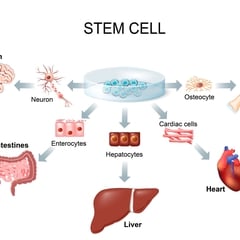
Stem cell therapy is a type of regenerative medicine used to treat and study disease. It is used in cancer treatment and to reduce the risk of infection.1
American Cancer Society. How stem cell and bone marrow transplants are used to treat cancer.
Researchers are looking for other ways to use stem cells in medical therapies.
This article will cover stem cells, which conditions they treat, and their safety. It will also discuss stem cell therapy's side effects and risks.

The term “alternative medicine” encompasses a wide range of medical practices and systems from cultures around the world.
While doctors in one part of the world might regard a practice as mainstream, doctors elsewhere might view the same practice as alternative.
This article discusses what alternative medicine is, different types of alternative medicine, and whether it is better than conventional medicine.

Tea tree (or Tea tree) is a very trendy oil… Have you ever heard of tea tree oil? Surely there must be! By friends, family or colleagues… Tea tree oil appears quickly in conversations when we talk about essential oils or aromatherapy…
So what is this essential oil? What is it really for?
We will clarify the story regarding this little star!

Are Multivitamins Really Any Good for Your Health?
By Karen Ansel, RDNMedically Reviewed by Lynn Grieger, RDN, CDCES
Reviewed:

New research has found that women who were taking estrogen were less likely to die of COVID-19 than women with natural estrogen levels.